Showing posts with label cannes film festival. Show all posts

Circuit Round-Up, 05/30

* Good morning, readers. As a reminder of last week’s events, I give my thoughts on the Oscar potential of the major Cannes Film Festival award winners.

* Joey Magidson chooses the lesser of two evils (actually more like mediocrities) for his DVD Picks of the Week.

* Anna Belickis was nonplussed by both Jumping the Broom and Madea’s Big Happy Family, Mike Ward confirmed our suspicions about Pirates of the Caribbean: On Stranger Tides, and Joey recommended Daydream Nation and raved about Midnight in Paris.

* Speaking of which, I commemorate the release of Woody Allen’s latest film with a Historical Circuit retrospective on one of my favorite works from him.

* Anna also recaps the penultimate episode of “Dancing with the Stars.” Stay tuned for her thoughts on the finale.

* Oscar Tracker gets launched, with The Tree of Life and We Need to Talk About Kevin being the major additions.

* Remember also that today is Memorial Day. The Awards Circuit extends our gratitude to the brave members of America's armed forces who made the ultimate sacrifice for our country.

Todd McCarthy wraps up Cannes...

...and here's his take, from The Hollywood Reporter:

This was a year of some strangeness in Cannes, of one major auteur being kicked out of town, another proving invisible and yet another -- one not allowed to work or travel from his native country -- sneaking his illicit new creation into France hidden in a loaf of bread.

Even if there were a number of very fine films, the 2011 festival arguably did not yield any absolute knockouts. The more elaborate works from the heavyweights in the competition -- Terrence Malick, Lars von Trier, Pedro Almodovar, Paolo Sorrentino, Nuri Bilge Ceylan -- were among the more contentiously debated, provoking reactions across the full spectrum of critical opinion.

By contrast, it was often the simpler, more modestly scaled films, the films that did not insist at the outset upon their importance or greatness -- Michel Hazanavicius’s silent black-and-white comic melodrama The Artist, Nicolas Winding Refn’s stripped-down auto actioner Drive, the Dardenne brothers’ small, redemptive drama The Kid With a Bike, Aki Kaurismaki’s seriocomic thriller Le Havre -- that went over best; clear thinking and an assurance of how to place an economical style at the service of substance were most often what carried the day.

It seemed to vaguely disappoint his most ardent longtime admirers and is far from perfect, but Malick’s The Tree of Life remained the film that made the strongest impression on me throughout this 64th Cannes. Artistically risky and aesthetically beautiful, it made its points impressionistically through hundreds of visual and aural pin-pricks, and I’m quite keen to see it again. Brad Pitt is terrific in it, but it’s the framing material, with Sean Penn playing Pitt’s grown son who doesn’t get to say or think a thing, that doesn’t cut it. I’m willing to bet that, had a nonstar played the son, Malick -- who cut Adrian Brody out of The Thin Red Line -- might have eventually decided to eliminate this material entirely but could not without causing a contractual mess and ruining a relationship.

The high-art contingent seemed highest on Turkish virtuoso Ceylan’s metaphysical thriller Once Upon a Time in Anatolia, which I had to miss but many compared to a more abstracted Zodiac, while we all grooved on the prolific Danish genre enthusiast Refn’s Drive, a sort of thinking fan’s alternative to Fast Five. I learned here from Refn’s father, who is von Trier’s longtime editor and sometime assistant director, that his son spent a good part of his teenage years frequently the now-extinct grindhouses on 42nd Street in New York City, which explains a few things and makes him something of a spiritual brother to Quentin Tarantino.

Back in form, the director said, because he’s drinking again after having turned out disappointing work while sober, Kaurismaki delivered one of his most delightful films in the French-language Le Havre, in which Andre Wilms reveals a resilient inner core to his author-turned-shoeshine man that recalls such long-ago leading men as Spencer Tracy, Humphrey Bogart and Jean Gabin. The modest and self-consciously artificial art direction also summons memories of movies past in this tale of determined selflessness and humanity.

Similar in its depiction of moments of grace and enlightenment, of an adult helping a child who has been cast to the elements, was Jean-Pierre and Luc Dardenne’s very fine The Kid With the Bike, in which decisive moments of change or elevated insight are marked with strains of classical music. There were funny stories circulating of the child actor Thomas Doret, impressed with actress Cecile de France’s reports of Clint Eastwood preferring to do only one or two takes on Hereafter, trying to get the famously demanding Dardennes to do the same and actually succeeding in one scene where he gets hit and knocked down.

Hazanavicius’s The Artist, an A Star Is Born-like Hollywood seriocomedy about a silent star’s decline and an actress’s ascent with the arrival of talking pictures, which was moved up from a noncompeting to a Competition slot just before the festival began, is nothing if not lovingly and conscientiously done with its use of black-and-white and silent film technique. The increasing feeling is that, if the Weinstein Co. handles it with the aggressiveness and enthusiasm for which it is known, the novelty of this cinephile’s delight could make it into a one-off event for the wider public.

Another oddball film with some potential is Josef Cedar’s Footnote from Israel, a flawed but compelling father-son contest set in the rarefied but -- the way the film handles it -- hardly inaccessible world of Talmudic academia.

It was not to all tastes, but I enjoyed being transported into the exotic realm of Bertrand Bonello’s L’Apollonide (House of Tolerance), which takes place entirely in a high-end Paris bordello in 1900, just the time when such establishments were being shut down. Titillating in a different way was Almodovar’s The Skin I Live In, in which a twisted Frankenstein's monster tale is airlifted into the era of advanced scientific breakthroughs, plastic surgery and sexual identity change. This might not be one of the Spanish master’s best films, but his seductive craft alone makes it more than worth seeing.

The general feeling here is that von Trier was obviously goofing and not being sincere with his Nazi comments and was probably just trying, however misguidedly, to enliven a press conference that was starting to sag at that point. If you watch the video of the press conference and don’t just read the transcribed words, it’s quite clear that this was a film director’s lame version of a comic trying desperately for a laugh that was never going to come; he just kept digging the hole deeper, and it might be some time before he can climb out of it, if he can at all. Which leaves the uneven but unavoidably compelling Melancholia in a precarious spot: Will distributors dump it? Will it be protested at film festivals? Will it be harder for von Trier to find the money for his projected next film, the hardcore The Nymphomaniac? That’s what he’s worried about.

Similarly erratic was Sorrentino’s nutty, sometimes funny, other times madly misguided This Must Be the Place, in which you can’t take your eyes off Penn playing a 50-year-old goth rocker who’s been hiding in an Irish mansion for 20 years before taking off on a road trip in an America that’s unknown to him.

Lynne Ramsay’s We Need to Talk About Kevin is a very well made but maddeningly obvious study of a family which includes a teenage mass-killer-to-be, while Maiwenn’s Polisse, quite liked even by some highbrow critics in France, has a souped energy but feels like multiple TV episodes crammed into one overflowing pot.

The films I found perhaps the least rewarding in the Competition this year were Julia Leigh’s Sleeping Beauty from Australia and, surprisingly, Takashi Miike’s Hara-kiri: Death of a Samurai, which, unlike last year’s 13 Samurai, I found hopelessly ponderous and without a shred of relevance to a modern audience.

As for the film snuck into Cannes in a loaf of bread, it was This Is Not a Film, a brave and unique document from the front represented by Jafar Panahi’s Tehran apartment, where he is waiting to see if he will be sent to jail. In the meantime, having been banned by Iran from making films for the next 20 years, he recorded thoughts, snippets from a proposed film and telltale sounds and images of things going on in the city beyond his windows, with a home video camera -- hence, it is not really a movie -- and managed to get them to the outside world, which will surely, deservedly and thankfully see them at numerous film festivals in the coming months.

-Joey's Two Cents: It's an interesting take on the festival...hopefully in a year or two I'll be able to make the trek as well. Thoughts?

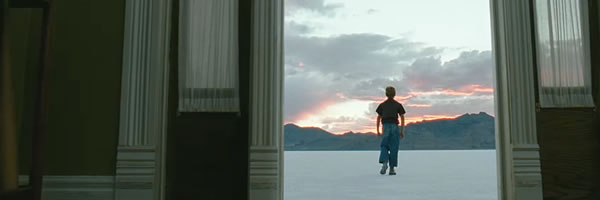
Go figure...The Tree of Life wins the Palme d'Or!

Behold the prizes:

Official Competition Palme d'Or: The Tree Of Life (dir: Terrence Malick)

Grand Prix (Runner-up to main award): (tie) Kid With A Bike (dir: Dardenne brothers), Once Upon A Time In Anatolia (Nuri Bilge Ceylan)

Best Actor: Jean Dujardin (The Artist)

Mise en Scene (Best Director): Nicolas Winding Refn (Drive)

Best Actress: Kirsten Dunst (Melancholia)

Prix du Scenario (Screenplay): Joseph Cedar, Footnote (Israel) Prix Du Jury: Poliss (dir: Maiwenn)

Palme d'Or Court Metrage: Cross Country (dir: Maryna Vroda)

Camera d'Or (Best First Film): Las Acasias (dir: Pablo Giorgelli)

-Joey's Two Cents: The top prize going to The Tree of Life was mildly surprising, but it was always going to be an all or nothing endeavor (shame on me for predicting otherwise). Overall, I was right about the acting awards, which I'm kind of proud of, and counting my alternates, I hit on Director as well...thoughts?

While we wait for the Palme d'Or announcement...

Soon enough, we'll know the identities of the honorees, but first thing's first...here are my updated predictions for the big prizes, since they've been requested of me. Do note that I'm mixing in the buzz I've heard with some of my own theories and just a little bit of guesswork as well. Bombs away:

Palme d'Or: The Artist (Alternate: Drive)
Grand Prix: We Need to Talk About Kevin (Alternate: The Tree of Life)
Jury Prize: This Must Be The Place (Alternate: Sleeping Beauty)
Best Director: Lynne Ramsey for We Need to Talk About Kevin (Alternate: Nicolas Winding Refn for Drive)
Best Actor: Jean Dujardin for The Artist (Alternate: Ryan Gosling for Drive)
Best Actress: Kirsten Dunst for Melancholia (Alternate: Tilda Swinton for We Need to Talk About Kevin)
Best Screenplay: The Artist (Alternate: The Tree of Life)


Now, for the already announced winners, via Variety:

Aki Kaurismaki's ''Le Havre,'' Pierre Schoeller's ''The Minister'' and Jeff Nichols' ''Take Shelter'' shared awards Saturday at Cannes from the Fipresci Intl. Federation of Film Critics.
Also announced Saturday, Cannes' Ecumenical Jury awarded its main Prix to Italian Paolo Sorrentino's Sean Penn starrer ''This Must Be the Place.''

Fipresci plaudits go to one outstanding film in Cannes Competition and Un Certain Regard and a third in either Directors' Fortnight or Critics' Week.

Cannes Competition contender ''Le Havre'' finds Kaurismaki at the top of his deadpan comedy game, delivering a crowd-pleasing tale toplining Kaurismaki regular Andre Wilms as a shoeshine who takes an African stowaway under his wing.

Cannes Competition favorite among international critics, at least through Friday, ''Le Havre'' is sold by The Match Factory, and produced by Sputnik, France's Pyramide Prods. and Germany's Pandora Film Prod.

''Minister'''s Fipresci nod as best film in Un Certain Regard comes as something of a surprise: Schoeller's follow-up to ''Versailles,'' it garnered good reviews as an convincing description of the all-consuming soul-destroying grind of high public office - here France's transport minister, played by Olivier Gourmet.

But the subject is far fresher in France , where politicians have traditionally gone about their business in private - than in the U.S. or U.K. context.

Defending the award, French Fipresci jury member Laurent Atnin said ''The Minister'' was totally different from Nicolas Sarkozy portrait ''The Conquest,'' also at Cannes.

''The Minister'' is ''a surprise from the start to the end, a psychological portrait of a fictional political figure which confirms Schoeller after 'Versailles' as a very promising talent,'' Atnin said.

Acquired by Sony Pictures Classics before its upbeat reception at Sundance, psychological thriller ''Take Shelter'' adds the Fipresci plaudit to a growing prize trawl, including Thursday's Cannes Critics' Week Grand Prix.

Playing Competition Thursday, ''Place'' features a dominating performance by Penn as an aged rock star turned Nazi hunter.

Ecumenical Special Mentions went to ''Le Havre'' and Lebanese Nadine Labaki's Un Certain Regard player ''Where Do We Go Now,'' her follow-up to ''Caramel.''

Co-produced and sold internationally by Pathe, ''Now'' turns on the Muslim and Christian womenfolk in a village who band together to defuse sectarian violence between their hothead men.

A ''real revolt'' against continuing conflict in Lebanon, Labaki said after receiving the mention, ''Now'' is a ''cry from the heart.''

The Ecumenical jury mention would help its message reach wider international audiences, she added.

-Joey's Two Cents: Those predictions above aren't too dissimilar from what they looked like when the festival started, which is a testament to the quality of the slate overall...thoughts?

Which 10 films have the strongest chances of walking away with the top prize at Cannes?

Well, everyone's got their opinions right now (and mine are certainly different from this), but Total Film has 10 flicks as the ones to look out for. Personally, I'm of the thinking that the jury could go in a strange direction and choose Drive or go classic and pick The Artist, but that's just me. Here's the list of 10, with elaborations after the cut:

The Tree of Life
Polisse
We Need to Talk About Kevin
Le Gamin Au Velo
Melancholia
Sleeping Beauty
The Artist
The Skin I Live In
Drive
This Must Be The Place

The Tree Of Life

dir. Terence Malick

The Film: A study of a 1950s Midwestern family. Plus how the universe started.

Why It Should Win: It’s a major film from a major filmmaker that’s majorly good (with some minor flaws). Sure, Terrence Malick has another movie on the go already, but who knows when that’ll be ready?

This is an opportunity for De Niro and co to award the top prize to one of the greatest living auteurs (who’s been in Competition before with The Thin Red Line and Days Of Heaven, winning Best Director for the latter).

It may have split the critics, but it’s the film on everyone’s lips.

Plus if Tree wins, we may finally get to hear the reclusive genius talk in public. Stranger things have happened…

Standout scene: The 20-odd-minute sequence depicting the birth of the Earth.

Awe-inspiring, transcendent, epiphanic… our thesaurus simply can’t do justice to the beauty, majesty and mystery of Malick’s vision of How It All Began.

Although the dinosaurs are slightly disappointing.

Polisse

dir. Maïwenn

The Film: A hard-hitting look at the cases and officers in a French police Child Protection Unit.

Why It Should Win: A brave yet measured film, based on real cases of child abuse from French police files.

The film not only has an outstanding ensemble cast - any of whom could easily be among best actor nominees - but also a maverick director in the form of Maïwenn (pictured - she also plays photographer Melissa).

Standout Scene: The heart-wrenching moment when a young boy is separated from his mother, who abandons him to the care of the Child Protection Unit.

His screams resonate right through you - his pain is so real you wonder what the director said to him to spark such a performance.

We Need To Talk About Kevin

dir. Lynne Ramsey

The Film: A mother grapples with guilt over her son, the problem child to end all problem children.

Why It Should Win: From Mickey Rourke to Mr Spock, everyone loves a comeback. And what a pleasure to see that, nearly a decade after Morvern Callar (and an abortive attempt to make Lovely Bones), Lynn Ramsay has still got it.

The Scottish director re-tells Lionel Shriver’s book her own way: fragmentary, impressionistic, intensely cinematic (check out that opening shot).

As such, it’s Ramsay’s personal vision – and Cannes loves a personal vision.

She’s won several smaller prizes at the fest before, and with Tilda Swinton a shoo-in the for the Best Actress shortlist, Kevin could easily go for gold.

Standout Scene: Lots to choose from, but let’s stick with that opener – a startling God’s eye view of a slo-mo scrum soaked in red pulp (at Spain’s Tomatina Festival) that’s both sensual and scary.

Le Gamin Au Velo

dir. Jean-Pierre Dardenne & Luc Dardenne

The Film: Unwanted by his dad, an 11-year-old boy becomes the wary ward of a young woman.

Why It Should Win: History would be made if siblings Luc and Jean-Pierre Dardenne took home the Palme d’Or for a third time (after Rosetta and L’Enfant).

Sure, the Belgian bros’ previous success may incline the jury to give someone else a go.

But the warm, humanistic Le Gamin Au Velo is also that cherished thing, a return to form after the disappointing-by-their-standards The Silence Of Lorna (2008).

If there’s a slight sense of the Dardennes sticking with what they know, it’s also the kind of movie everyone can agree on – handy when there’s a jury involved.

Standout Scene: An extended side-view of the boy pedaling furiously on his bike – no cuts, no embellishments, pure Dardenne.

Melancholia

dir. Lars Von Trier

The Film: Two sisters come to terms with the end of the world in very different ways, as the planet Melancholia sets a collision course with Earth.

Why It Should Win: Lars von Trier's first "unhappy ending", it's no surprise that this is a bit of a downer. Nonetheless, it's a beautifully composed, often compelling (for the first hour at least) apocalypse movie that draws strong performances from the likes of Kirsten Dunst and Kiefer Sutherland.

True, it can't maintain the momentum through the ponderous last act and it's nowhere near as provocative as some of his other works (Antichrist, anyone?), but von Trier and Cannes go way back: he won the Palme d'Or for 2000's Dancer In The Dark and this is his ninth nomination.

Standout Scene: The opening montage - birds fall from the sky, Dunst floats down a stream and two worlds collide, all in sumptuous slo-mo.

Sleeping Beauty

dir. Julia Leigh

The Film: A morally suspect student earns money as a sleeping beauty - paid to sleep while men have their way with her.

Why It Should Win: A breakout performance from Sucker Punch star Emily Browning, who transcends her previous fare as the wayward Lucy in this dark fairy tale.

Director Leigh is a first timer - also competing for the Camera d'Or - and her bold, no frills, confrontational debut could be rewarded by the jury, and make her the first female to take the gong.

Standout Scene: In the chamber for the second time, Lucy's client for the night doesn't want to play nice…

The camera is an unflinching voyeur as 'Man 2' gets down to business - a shocking, disturbing scene that makes you fear for both character and actress.

The Artist

dir. Michael Hazanavicius

The Film: A silent-movie superstar is dealt a career blow when sound comes to the pictures.

Why It Should Win: Last year the top gong went to the black sheep of the festival: the singular Uncle Boonmee Who Can Recall His Past Lives. What’s to stop the jury awarding novelty once again?

The Artist is a salute to silent cinema, shot in Academy ratio (1.33:1) in black and white – the sort of thing multiplexes weren’t made for, but international film festivals were.

Michel Hazanavicius’ film is a cinephile’s delight, but it’s also funny, accessible and features an adorable dog.

Something to tickle every voter’s fancy, then. The critics cheered, the premiere crowd went nuts, chances are the jury will love it too.

Standout Scene: When The Artist plonks down a glass… and it makes a sound! It’s the beginning of the end! Possibly the best glass tumbler moment in cinema since Jurassic Park.

The Skin I Live In

dir. Pedro Almodovar

The Film: A plastic surgeon works on developing a new, tougher form of synthetic skin, but there are dark secrets behind his work...

Why it should win: A blistering return to form after the indulgent Broken Embraces, Almodóvar's thriller is suitably tense, darkly comic and wonderfully weird - not unlike much of his earlier work.

Brilliant performances - including a career high from the director's former go-to guy, Antonio Banderas - help power the twisty/turny plot, making this one of our faves of the fest. Almodóvar has never won the Palme d'Or - could this be his year?

Standout Scene: To tell you would be to ruin the enjoyment of going in cold, so we'll just say two words: operating table.

Drive

dir. Nicholas Winding Refn

The Film: A part-time stuntman makes extra money as a getaway driver, but finds himself turning protector when he gets involved with a young mother.

Why It Should Win: The nearest thing to a crowd pleaser at this year's festival, Drive had them whooping, cheering and clapping in the aisles.

Nowhere near as weighty as the rest of the competition slate, the jury may still find room to reward Refn's stylish direction, or emerging Cannes stalwart Gosling's cool transition into stone cold killer.

With nods to both Walter Hill's Driver and Michael Mann's Thief, Drive is a retrofit crime thriller not lacking in style nor substance, but it deserves the Palme d'Or for the electronic score alone.

Standout Scene: Gosling's wheelman springs into action after a heist, pulling some audacious moves to out run a vehicle in pursuit. The boy can drive...

This Must Be The Place

dir. Paolo Sorrentino

The Film: A washed up rock star sets off on a road trip to meet the man who killed his father - a Nazi war criminal hiding in the US.

Why it should win: This doesn't screen until today - check Twitter for our reaction - but director Sorrentino scored big at Cannes in 2008 with Il Divo - and headed up the "Un Certain Regarde" jury in 2009 - so he has previous form.

And by the looks of him, Penn has turned in another classic performance, which could be the deciding factor.

Standout Scene: We'd imagine it involves Sean Penn looking a bit like Robert Smith and doing something kooky…

-Joey's Two Cents: I think we can count out Melancholia and Sleeping Beauty, but the rest are certainly in play...thoughts?

What's the early buzz on Drive after its first Cannes screening?

Well, /Film has the first reactions, and they're pretty positive:

The first Cannes screening of Drive, the new film from Nicolas Winding Refn that stars Ryan Gosling, Carey Mulligan, Bryan Cranston and Albert Brooks, ended not long ago. Reviews aren’t up yet, but a sampling of Twitter reactions suggests the movie has one of the most positive consensus opinions of the Cannes premieres so far — I think only We Need to Talk About Kevin and The Artist rival it for near-unanimity of positive opinion.

Check out a few reactions after the break.

A few initial Tweets, which might be chalked up to post-screening festival highs, hit right after the film was out. Let’s kick things off right. Guy Lodge from In Contention says: “DRIVE (A-) I won’t lie to you: I pretty much want to have sex with this movie. Hot, clipped, nasty, beautiful. Best thing in Competition.”

An additional Twitter sampling offers:

Eric Kohn: Walking out of DRIVE, feeling kinda wobbly. In a good way.

FirstShowing: “Nicolas Winding Refn’s Drive – Totally frickin’ awesome. Violent, but badass, great soundtrack. Ryan Goslingis the man. Loved it, new fave.”

Rope of Silicon: “‘Drive’ was a great way to end my time here in Cannes, really enjoyed and fans of Refn are in for a treat.”

IonCinema: “Cannes 2011: Refn’s DRIVE. More focus on the driving gloves than the cars. This one has got a mean streak and softer side: cult classic.”

Mike D’Angelo (Onion AV Club): “Let’s see if I can be the first person in your feed to say: DRIVE, holy shit.” and “Let’s see if I can be the first person in @albertbrooks ‘s feed to say: Dude, HOLY SHIT.”

But ‘holy shit’ can mean a lot of things. Not long afterward, Mr. D’Angelo got down to a slightly more measured take, which still makes the film sound like a success:

Drive (Winding Refn): 76. Patchy and shallow, but the highs are just insanely high. Half a dozen of the year’s best scenes. Genre bliss… And it’s not THE DRIVER II, either. Surprisingly little auto action. It should really be called LOOK given how predicated it is on faces…

And Jeff Wells chimed in with,

“Drive” isn’t as good as ” Thief,” but it’s respectably and sometimes very thrillingly in the same ballpark. Spare, hard, very high octane… All stand back & admire Albert Brooks for his older, smart-mouthed tough guy with a toupee in “Drive”…yay, Albert!… Ryan Gosling’s hard-guy, Steve McQueen character in “Drive,” but what there is he plays the he’ll put of. His first action film…wham!

Chase from Gordon and the Whale sounded one of the sour notes I’ve seen so far: “DRIVE made me really, really sad; I wanted to like it so much.”

-Joey's Two Cents: I've felt like this might be a dark horse for some awards citations since before the fest started, so perhaps I was on to something...thoughts?

Take Shelter wins the top prize at Cannes' Critics Week!

Via The Hollywood Reporter:

Jeff NicholsTake Shelter took the Grand Prize of the 50th annual Critics Week at a closing ceremony in Cannes on Thursday night.

The Sundance Competition title starring Michael Shannon and Jessica Chastain was named best film of the selection by a jury presided by Lee Chang-Dong.

Nichols also walked away with the SACD prize for best screenwriting. Sony Pictures Classics snagged the North American rights to the title earlier this year.

Justin Kurzel’s Snowtown earned a Special Mention by the President.

Pablo Giorgelli’s Las Acacias took home a double honor, winning both the OFAJ Young Critics Prize and the ACID (Association of Independent Cinema for its Distribution)/CCAS (Main Fund of Social Activities) award.

-Joey's Two Cents: The buzz is certainly building for this movie...thoughts?

Lars von Tries gets himself bannes from the Cannes Film Festival?

From The Hollywood Reporter:

The Cannes Film Festival has officially declared Lars Von Trier a persona non grata, effective immediately, after the controversial Danish director called himself a Nazi and expressed sympathy for Hitler at a press conference on Wednesday.

Von Trier has since apologized for the remarks, claiming he was provoked by journalists. But on Thursday, the Cannes Festival's board of directors held a meeting and voted to ban von Trier from the Festival.

"The Festival de Cannes provides artists from around the world with an exceptional forum to present their works and defend freedom of expression and creation," the Festival said in a statement. "The board of directors profoundly regrets that this forum has been used by Lars von Trier to express comments that are unacceptable, intolerable, and contrary to the ideals of humanity and generosity that preside over the very existence of the festival. The Board of Directors firmly condemns these comments and declares Lars von Trier a persona non grata at the Festival de Cannes, with effect immediately."

It is unclear if Von Trier's ban will be lifelong or if the director can rehabilitate himself. The Cannes Festival office refused to comment beyond its statement. This is the first time in recent memory that Cannes has blacklisted a director.

It is all the more astounding because von Trier is one of Cannes' favorite auteurs. Melancholia marks his ninth appearance in Cannes Competition. He has won the festival's top prize for Dancer in the Dark in 2000, and has twice taken the runner-up Jury Prize for Europa (1991) and Breaking the Waves (1996).

-Joey's Two Cents: Well, he certainly said something stupid...thoughts?

Do we have any clue how Robert De Niro's jury at Cannes might vote?

Well, not really (and Lars von Trier's new film 'Melancholia' just debuted today to strong reviews, making this a somewhat stacked festival so far, which can only make the decisions harder), but The Wrap has some details on what's going on with the jury on Day 8 of the Cannes Film Festival:

Pundits have begun to speculate about which film might win this year's Palme d'Or – but there's always a wild card in this card of Cannes speculation, because the award is chosen by a small group of people whose tastes and working relationships aren't always easy to determine.

That's why a report from Jeff Wells is so fascinating. Wells says he's spoken to "a journalist friend with some inside knowledge of the character of this Cannes jury," and that his pal laid out the dynamic. Jury president Robert De Niro, his source says, is "not likely to try to lobby for personal choices or views" (which presumably means he won't carry the same clout as reportedly assertive past jury presidents like Robert Altman and Roman Polanski).
Cannes juryThe most knowledgeable jury members, according to this report, are "Carlos" director Olivier Assayas and journalist Linn Ullmann, the daughter of Ingmar Bergman and Liv Ullman, while the least knowledgeable might be Hong Kong director Johnnie To, who "has a somewhat myopic, know-nothing view of other films or filmmakers."

The other jury members – actors Jude Law, Uma Thurman and Martina Gusman, producer Nansun Shi and director Mahamat Saleh Haroun – are not mentioned in Wells' report. The big questions, of course, are whether this info is accurate – and if it is, whether it tells us anything about what film might win. And the answers might be who knows?and probably not, though it's fun to speculate.

(Ian Gavan/Getty Images photo, left to right: Olivier Assayas, Linn Ullmann, Jude Law, Martina Gusman, Uma Thurman, Robert De Niro, Nansun Shi, Mahamat Saleh Haroun and Johnnie To.)

But what about the other kind of prize that a film could win coming out of Cannes – the prize of financial success? Scott Roxborough and Stuart Kemp survey that field at the Hollywood Reporter, though their headline ("Will Festival Films Deliver at the Box Office?") is a bit misleading, since the article talks about a bunch of marketplace films, but not a single one that's actually booked in the festival.

That said, their conclusion is that Paul W.S. Anderson's "Pompeii" is the big one, though they don't rule out the possibility that the slate of numerous international buyers might end up burnt by the high prices paid.

Other possible hits are star-driven: Dwayne Johnson in "Snitch," Meryl Streep in "Great Hope Springs."

Speaking of stars, one of the unwritten rules is that they'll show up when their movies debut on the Croisette. But this year, Anne Thompson has identified a Cannes trend, and she doesn't like it.

On Monday night, she says, Terrence Malick (not a "star" in the narrowest sense, but certainly a Cannes luminary) didn't show up for the press conference for his film "The Tree of Life," then he skipped the red carpet before his gala premiere and slipped into the theater without facing the press, flashbulbs or fans.


And on Tuesday, Mel Gibson was a no-show at the press conference for "The Beaver" – though unlike Malick, he did walk the red carpet for the film's premiere later in the day, but did so without stopping to speak to the press.

Says a disapproving Thompson: "One has to hope that Cannes director Thierry Fremaux nips this trend in the bud."

Finally, if you haven't heard enough about "The Tree of Life," a couple of new musings are worth checking out. Mike D'Angelo's take on the film at the Onion's AV Club wants to be a flat-out rave (an hour in, he says, "I was fully convinced I was bearing world-premiere witness to the equivalent of 'Birth Of A Nation' or 'Citizen Kane' or '2001: A Space Odyssey' — an instant benchmark against which the entire medium would henceforth be measured") but by the end he's forced to admit, "the space I’d cleared for it in my list of the five or ten greatest movies ever made remains empty."

For those who are dismayed that "Tree of Life" was booed at its initial press screening, meanwhile, Landon Palmer offers an instructive list of six other films that were booed at Cannes.

The dishonor roll: Lars von Trier's "Antichrist," Sofia Coppola's "Marie Antoinette," Vincent Gallo's "Brown Bunny," David Lynch's "Twin Peaks: Fire Walk With Me," Fellini's "The Voice of the Moon" and Antonioni's "L'Avventura," which Palmer calls "probably the most notorious Cannes booing in the festival's history, primarily because the film has since been placed in a pantheon amongst the best of all time."

-Joey's Two Cents: The final days of the festival are going to be very interesting, to say the least...thoughts?

Terrence Malick's Tree of Life has been planted at Cannes...what now?

Well, the wait ended today...'Tree of Life' finally revealed itself. Terrence Malick's long delayed opus screened at the Cannes Film Festival as well as to select people in places like New York and Los Angeles. The verdict? Even more mixed than we expected, it seems. There will be more said about the film in the coming days (and even below in this article), but I wanted to just turn our attention to the possible Oscar implications of this. With the festival so far propelling Woody Allen's 'Midnight in Paris', Michel Hazanavicius's 'The Artist', and Lynne Ramsey's 'We Need to Talk About Kevin' to the forefront in terms of quality, there are some new contenders to consider in early predictions. Likewise, Julia Leigh's 'Sleeping Beauty' and Gus Van Sant's 'Restless' debuting to less than stellar reviews and seemingly being out of the race before it's even really began has shaped things as well.
Where does that leave Malick's 'Tree of Life'? Well, I think the end result is that it's probably not going to gain the traction necessary for a real shot at Oscar glory, though don't count it out of the tech categories. Could this change when the critical community en masse chimes in next week when the film opens in the US? Of course...and even more so when the precursors begin in the 4th quarter of the year.
Where this all leaves us is right back where we started, essentially. Anyone looking for the flick to burst on the scene and begin a long march to Best Picture is sorely disappointed today, but those of us still feeling out the race to come just saw the field widen considerably.
Personally, I'm going to be removing the film from a lot of my early predictions next time around, but that's just me...
Want more on 'Tree of Life'? Well, then hit the jump for more!


Here's the Deadline story on the festival debut of 'Tree of Life':

While the foreplay between the Cannes Film Festival and Terrence Malick's complex rumination The Tree of Life has been going on for well over a year, it finally climaxed with this morning's 8:30 AM press screening. There was such anticipation for this film that the cavernous 2300-seat Lumiere Theatre at the Palais was completely full a half hour ahead of showtime -- unprecedented. Reactions afterwards seem to be mixed. There was a smattering of loud boos when the picture went to black at the end, but then good (but not spectacular) applause once Malick's name came up onscreen. One columnist immediately emailed a friend, "the film is terrible," while another critic rushed to print calling it "major."

The movie splits its time between the lives of a family in 1950's Texas with cosmic images of how the Universe was created, a couple of dinosaur cameos and bigger metaphysical questions about our existence than anyone can answer in a 2-hour, 18-minute movie, even Terrence Malick. It's not a traditional kind of narrative but rather an experiencemeant to inspire deep thought about our own lives in a greater context. For those special effects sequences detailing the beginnings of time alone the three companies whose logos appear at the top of the film (Fox Searchlight, Summit, River Road) should be doing everything they can to insure this gets booked on to every available IMAX screen. It's a visual stunner, as you might expect from a man whose four previous films were Days Of Heaven, Badlands, The Thin Red Line and The New World.

Four-time Oscar nominated cinematographer Emmanuel Lubezki was behind the camera and did a sterling job juxtaposing between small-town Texas and the evolution of the world, no easy task. Certainly what's on display in this much-delayed work is vintage Malick, the kind of auteur Cannes loves (he won Best Director here for Days Of Heaven in 1978), but it can't help but divide audiences the way many great art films do. It can be compared in ways to Stanley Kubrick's 1968 masterpiece 2001: A Space Odyssey, which also split audiences at the time but now is regarded a true classic (not surprisingly, 2001 special effects wizard Douglas Trumball consulted here too).

Some people have the patience and curiosity to endlessly explore movies like this like they would a great painting, others just want the normal popcorn fare. This isanything but that as principals, including star (and producer) Brad Pitt and Jessica Chastain, tried to explain at the press conference that followed the screening. Missing was co-star Sean Penn, who is en route from Haiti to Cannes for tonight's premiere (and the preem of his other film here later in the week, This Must Be The Place, as well as Wednesday night's Cinema For Peace dinner at the Carlton where he is being honored for his humanitarian work) according to producer Bill Pohlad, who also appeared on the panel with producers Grant Hill, Sarah Green and Dede Gardner (Pitt's producing partner). Most notably absent though was Malick himself, a highly unusual occurence at a Cannes press conference. This is a director-driven fest if ever there was one. Green explained away the absence of the ultra-reclusive helmer. "Mr. Malick is very shy. He likes to think his work can speak for himself," she said, and when pressed further, it was emphasized "he's really shy." The fact is Malick is here for the premiere and will be walking the red carpet tonight, which is an easy thing in Cannes since at premieres directors just wave, pose for pictures and soak up the adulation. One thing they don't have to do is talk. Searchlight co-president Nancy Utley told me a few weeks ago that Malick would be travelling to Cannes but likely unavailable while he was here. He never gives interviews, not even in the official press notes.

It really didn't matter, since most of the questions were about Malick anyway, even with Pitt sitting right there in the middle. Pitt explained how he loved Malick's directorial style. "I could go on about him for a couple of days. He was more interested in capturing what might be happening on that day (rather than what's in the script), waiting for the truth to come. There was only one light on the set, the rest was all natural and handheld. I don't know that I could do this a lot. It was exhausting, but you see what you get," he said. Of this experience Pitt also added, "It's changed everything I've done since. For me, the best moments are not pre-conceived or planned. I now try to go off script and see what happens."

Pitt said he and Plan B Entertainment partner Gardner jumped on board because they wanted to see Malick's script made. "I was surprised by the structure. It's quite ingenious merging the micro with the macro and finding parallel truths in it," he said. As for the version that was meant to originally come to Cannes last year but was eventually deemed "not ready" compared with the version being debuted today, Pohlad said "there isn't a huge difference, but there were refinements."

The film is certainly stirring up talk here, so Malick, the Garbo of directors, will get his wish. People will decide for themselves. As I mentioned in a piece yesterday, Chastain told me Sunday she likes to tell people "this is a movie that could change cinema." After seeing The Tree of Life, I would say that would only be possible if studios start giving extrordinary visionary but eclectic directors like Malick big budgets to bring their personal art to the screen -- and that ain't happening in Hollywood's corporate culture anytime soon. Bottom line is every now and then one slips through the system, gets made, even released with the director's vision intact. And that's why we've finally got this one to argue about up and down the Croisette today.

Before the fest started, many in the media were predicting Malick, with his film sight-unseen, could be the one to beat for the Palme d'Or. It's certainly possible, but with so many of Cannes' favorite auteur directors still to come this week, the race for Sunday's top honors is just heating up.


Here's what The Wrap had to say about the reception of Malick's film, both at Cannes and here at home:

"The Tree of Life" didn’t just dominate moviegoers conversations in Cannes today. Sure, Terrence Malick's years-in the-making film was the talk of the Croisette, from an 8:30 a.m. screening that required a second theater to handle the overflow, to an evening premiere that attracted the likes of Faye Dunaway, Gwen Stefani, Isabelle Huppert and of course Brad and Angelina.

Tree of Life cast(Photo of Sean Penn, Jessica Chastain and Brad Pitt by Pascal Le Segretain/Getty Images)

But Fox Searchlight also screened the film repeatedly in London, in New York and in Los Angeles, lifting the veil on a movie that once upon a time was thought to be on track for a late 2009 release, or at least a 2010 Cannes berth.

The Cannes audience was famously divided: Sasha Stone's first take from that morning screening is here, and her longer review here. And other critics seemed to agree about a few things: the film is not commercial, it's stunningly beautiful, and it's like nothing else you've seen.

Todd McCarthy called it "an exceptional and major film" in a review that began like this: "Brandishing an ambition it’s likely no film ... could entirely fulfill, 'The Tree of Life' is nonetheless a singular work, an impressionistic metaphysical inquiry into mankind’s place in the grand scheme of things that releases waves of insights amidst its narrative imprecisions."

Justin Chang said the film "represents something extraordinary" (which I guess is different from being something extraordinary) and said it was "a transfixing odyssey through time and memory that melds a young boy's 1950s upbringing with a majesterial rumination on the Earth's origins."

Lisa Schwarzbaum was more divided: "A (typically) fascinating but confounding jumble of two works in one … the luminously precise and the woo-woo spiritual-lite."

Guy Lodge said he was left "stimulated but unmoved," adding, "his most open-armed and structurally undisciplined film to date, it might yet prove his least rewarding."

And Jeff Wells, while declaring that the film runs aground somewhat after a dazzling opening stretch, nonetheless scolded those who dared to boo after the first Cannes screening: "I think it's beastly to boo a film as hauntingly beautiful and immensely ambitious and spiritually directed as this one."

The trouble with all of this is that Malick is so significant a filmmaker, and the lengthy delays before he finally showed "The Tree of Life" were so long, that reviewers have been all but forced to rush into print with instant verdicts. And after seeing it on Monday morning in Los Angeles, I'd say that this is clearly a film that needs time to settle, and quite possibly additional viewings as well.

But in keeping with the fact that this is, to borrow a phrase from the Hot Blog, "Just Another Malick Monday," I'll say this: the view from these shores is that "The Tree of Life" is magnificent and maddening, frequently dazzling and occasionally disappointing.

It takes the lyrical sequences that ran through "The Thin Red Line" and "The New World" as counterpoint to the action – all those whispered voiceovers over shots of rustling grass, wind blowing through trees, water and sky – and tells almost the entire story in that fashion. The main plotline, of Brad Pitt and Jessica Chastain and their three kids in the 1950s, is told in fragments, not scenes; we drop in the middle of the action, or on the edges of the action, and then leave before anything is settled.

Tree of Life posterAgain and again, this is a work assembled in rapturous montage. (Its poster, right, is more accurate than I realized.) It's the most daring and unconventional film that a major or major-affiliated studio will release this year not because it opens with a half-hour reverie that begins with parents learning of a child's death and works in the creation of the universe – but because once it leaves that gorgeous sequence, it continues to use those rhythms and moods to tell the story.

"The Tree of Life" is a dreamscape built on the words of the mystical medieval monk Thomas a Kempis, and the music of Berlioz and Brahms and Bach and Ligeti. At its best, it finds a true "way of grace," a phrase taken from a crucial Chastain voiceover; at its clunkiest, it slows to a crawl to overembellish a story that can’t bear the weight.

It can be inspiring and it can be infuriating, and it will almost certainly be too weird for a mainstream audience and too weird to win (though maybe not to be nominated for) Best Picture. It will likely be in the mix for a variety of awards, for its editing and its art direction and above all its cinematography, which is absolutely stunning.

In April, when Searchlight launched a new website for the film, "Two Ways Through Life," I called the site weird and tantalizing, enigmatic and haunting, vague and impressionistic. It turns out that the site is also a completely accurate representation of the film itself.

"The Tree of Life" deserves more time; it deserves not to be reduced to the question "did they boo?" and a series of instant reviews and an opening-weekend box-office figure.

This one, I suspect, will be dominating moviegoers' conversations for some time to come.


-Thoughts?

Cannes Film Festival: Terrence Malick and Brad Pitt's 'Tree of Life' draws boos, but also counter-applause.


According the Entertainment Weekly:

It’s daunting to describe Terrence Malick’s The Tree of Life, but scattered audience members at its first screening in Cannes needed only one syllable: boo.

The many supporters of the movie pushed back with counter-applause, but it was a shocking way for the movie to debut.

The Tree of Life is an elegiac litany of images and memory-like scenes more than a traditional narrative. Let’s see — in brief, it’s the origin of time and infinity through the lens of one troubled, 1950s-era Texas family, and stars Brad Pitt and Jessica Chastain, though they share copious screen time with evolving galaxies, nebulae, and surreal, symbolic representations of the world beyond.

Call it a coming of age story about the universe.

Here’s how the chaos — on screen and off — unfolded today …


The scene outside the 8:30 a.m. screening at the festival’s Grand Theatre Lumiere was a mosh pit of fearsome determination.

Malick is somewhat the J.D. Salinger of filmmakers, rarely photographed, and never submitting to interviews. Though he is hardly prolific, his handful of films have been striking for their visual splendor and meditative tones: Badlands, Days of Heaven, The Thin Red Line, The New World.

Though the movie opens for everyone May 27, audience members crushed at the entrance Monday morning, shoving and hollering to gain entrance to a film that has been eagerly anticipated at Cannes for two years. With passions so high to see it, the movie’s debut mirrored the film’s central conflict: a boy trying to live up to the high standards of his harsh father. Only in this case it was Cannes notoriously harsh community of critics and journalists

As long-form reviews were being written there was push-back against the booing on Twitter. “Yes, some booed at Tree of Life‘s end, but a) far more clapped, b) wouldn’t a monobloc of opinion be dull? And, of course, c) jerks abound,” wrote MSN Movies’ James Rocchi.

“The booing at the end of today’s Tree of Life screening was an ugly, animalistic thing that may explain why Malick doesn’t do press,” added IndieWire’s Eric Kohn.

And yes, the notoriously elusive Malick continued his long tradition of not speaking on behalf of his movies, and did not attend the press conference after the screening. His producer, Sarah Green, said he prefers to stay out of the spotlight because, “Mr. Malick is very shy and I would say I believe his work speaks for him.”

Pitt had no problem speaking instead. “He tells this micro story of this family in a small town in Texas and juxtaposes it with the macro of the birth of the cosmos and cells splitting,” he said. “I find that so extraordinary. There are parallel truths in that.”

The actor said repeatedly he could go on at length about the process Malick employed to make such an unusual film. There are few dialogue-driven scenes, and the child actors at the center of the tale were not permitted to see the script, Pitt said, instead being told roughly what to do or say. Pitt said Malick wanted everyone to follow their instincts.

“He’s like a guy with a butterfly net waiting for the truth to go by,” Pitt said.

“It was all about capturing the accident,” Chastain added, citing a for-instance: “There’s a section where a butterfly lands on my hand. It’s not in the script, and we didn’t put anything on my hand to make it land there.”

“It’s a leap of faith, but that’s the point,” Pitt said.

Malick rented the entire neighborhood where they shot, dressed it to resemble the 1950s period, and would have the family linger together on the street, playing on swings, or working in the yard, while the capture awaited special moments.

“Then he does what he calls torpedoing a scene,” Pitt said. “The youngest child he called The Torpedo. On the first day, [Chastain and I] were having an argument, raising our voices, and we shot that take. Then suddenly he would send in Ty, as the Torpedo, and it changed the whole dynamic of the scene.”

There was some joking about the absent director, whom Chastain said tended to steer the camera toward nearby woodpecker or something else in nature if it interrupted the scene. Instead of ruining the take, that tended to be the thing Malick would rather use.

Pitt said he had no problem with the director choosing not to speak about the movie publicly. “You know how you have a favorite song and then you hear the band describing your favorite lyrics, and then you’re disappointed?” he asked the room of journalists, who responded with silence.

“No?” he said.

Thoughts?