We have selected them from different strata of society. Each one has contributed immensely to influencing Nigerians in various ways. Is it Oluwole Akinwande, the poet whose ———-, gets you dizzy? Or Asa, the one whose African lyrics hit high notes on the air waves of Champse de Elise in Paris? Or Pastor Enoch Adeboye, whose genteel manner is said to break down the fiercest of strongholds.
These are Nigerian men and women we admire. And, as we continue to celebrate Nigeria at 50, thinking despondent thoughts, these great achievers give us hope: that there is much more to us than what people in citadels of power spew at us. Join us to celebrate these 10 influential Nigerians as part of the achievements of our dear country

Asa was born in 1982 in Paris. She lived there for two years and after she went to Lagos in Nigeria. Her real name is Bukola Elemide and her nickname Asa means “little hawk” because when she was young she often ran away and changed directions like a hawk.
Her mother was a shopkeeper and her father shot video reports for weddings and that’s how she discovered music more particularly Bob Marley and Fela Kutti’s songs. She has got three brothers.
She is success full thanks to her lyrics which deal with Africa, everyday life things with lots of irony. She is the new singer of soul, pop and reggae music!!!! She is compared to Tracy Chapman
 Chimamanda Ngozi Adichie (born September 15, 1977) is a writer whose first two novels won literary awards. She is a native of Abba, in Njikoka Local Government Area of Anambra state. At the age of 19, Adichie left Nigeria and moved to the United States for college. After studying at Drexel University in Philadelphia, she transferred to Eastern Connecticut State University to live closer to her sister, who had a medical practice in Coventry (now in Mansfield, Connecticut). She continued studying communications and political science. She received a university degree from Eastern, where she graduated summa cum laude in 2001.
In 2003, she completed a master’s degree in creative writing at Johns Hopkins University in Baltimore. In 2008, she received a Master of Arts in African studies at Yale University.[2] Chimamanda is a 2008 MacArthur Fellow.[3]
Adichie had her first novel published in 2003. It received excellent reviews and won a literary award for first books. Her second novel won the 2007 Orange Prize for fiction.
In 2008, Adichie was a Visiting Writer at Wesleyan University in Connecticut, where she participated in Wesleyan’s Distinguished Writers Series.
Her first novel, Purple Hibiscus, was published in 2003 and won the 2005 Commonwealth Writers’ Prize for Best First Book.Her second novel, Half of a Yellow Sun, named after the flag of the short-lived Biafran nation, is set before and during the Biafran War. It was published by Fourth Estate in the UK and by Knopf/Anchor in 2006. It was awarded the 2007 Orange Prize for Fiction.
Her third book, a collection of short stories titled in the thing Around Your Neck, was published in April 2009 by Fourth Estate in the UK and Knopf in the US

Chief Emeka Anyaoku served as Commonwealth Secretary-General from 1990 to 2000.
Born Eleazar Chukwuemeka (Emeka) Anyaoku on 18 January 1933 in Obosi, Nigeria, he attended the Merchants of Light School in Oba and (as a College Scholar) the University College of Ibadan, at the time a college of the University of London and from which he obtained an honours degree in Classics. Chief Anyaoku later attended specialist courses in the United Kingdom and France.
In 1959, Emeka Anyaoku joined the Commonwealth Development Corporation. Following Nigeria’s independence, he was invited to join his country’s diplomatic service and, in 1963, was posted to Nigeria’s Permanent Mission to the United Nations in New York.
In 1966, shortly after the establishment of the Commonwealth Secretariat, he was seconded to the new organisation at the request of the first Secretary-General, Arnold Smith of Canada, as Assistant Director of International Affairs, later becoming Director and, in 1975, Assistant Secretary-General. In 1977, Commonwealth governments elected him Deputy Secretary-General with responsibility for international affairs and the Secretariat’s administration.
Nigeria’s civilian government of 1983 called on Chief Anyaoku to become the country’s Foreign Minister. On the overthrow of the Government by the military, he returned to his position as Deputy Secretary-General with the support of the new government in Nigeria and the endorsement of all Commonwealth governments.
At the 1989 Commonwealth Heads of Government Meeting (CHOGM) in Kuala Lumpur, Malaysia, Chief Anyaoku was elected the third Commonwealth Secretary-General. He was re-elected at the 1993 CHOGM in Limassol, Cyprus, for a second five-year term.
Under Chief Anyaoku’s guidance, the Secretariat also launched a variety of important initiatives in sustainable economic and social development, and through the Commonwealth Fund for Technical Co-operation (CFTC), the operational arm of the Secretariat, reinforced the benefits of co-operation and mutual assistance among members
 Ngozi Okonjo-Iweala (born June 13, 1954) was the former Finance Minister and Foreign Minister of Nigeria, notable for being the first woman to hold either of those positions. She served as finance minister from July 2003 until her appointment as foreign minister in June 2006, and as foreign minister until her resignation in August 2006. Okonjo-Iweala was considered as a possible replacement for former World Bank President Paul Wolfowitz. On October 4 2007 she was appointed as Managing Director of the World Bank by World Bank President Robert Zoellick.
Okonjo-Iweala is an Igbo[3] from Ogwashi-Uku, Delta State where her father Professor Chukuka Okonjo is the Obi, or King, from the Umu Obi Obahai Royal Family of Ogwashi-Ukwu.
Dr. Ngozi Okonjo-Iweala was educated at Harvard University, graduating magna cum laude with an A.B. in 1977, and earned her Ph.D. in regional economics and development from the Massachusetts Institute of Technology (MIT). She is married – her husband is from Umuahia
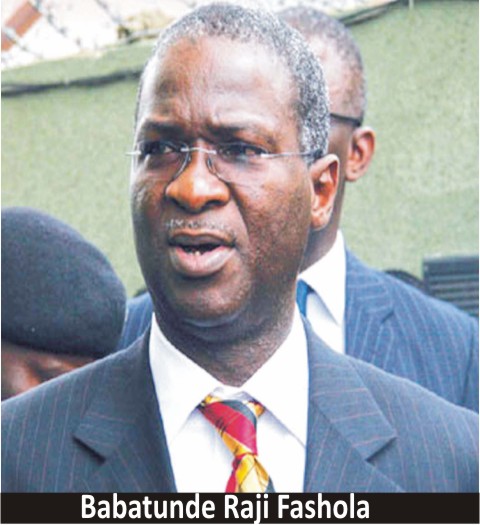 Babatunde Raji Fashola (born June 28, 1963) is the thirteenth governor of Lagos State, Nigeria. As a candidate of the Action Congress party, Fashola succeeded his predecessor, Bola Ahmed Tinubu, in April 14, 2007,[1] and was sworn in on May 29, 2007.
Babatunde Raji Fashola (SAN) is a descendant of the patriarch of the Fashola family, Alfa Bello Fashola of Princess Street in Isale Gangan, Lagos. On the Fashola family tree, he is the great grandson of Bello Fashola, a philanthropist and a very close friend of Esugbayi Eleko, who contributed morally and financially to the struggle to return Esugbayi Eleko to Lagos after the Oba’s banishment from his kingdom by the then colonial government. Bello Fashola had 137 children with Tiamiyu Bashorun Fashola as the eldest child. The direct linkage is as follows: Bello Fashola begat Tiamiyu Fashola, who begat Raji Olayinka Fashola, who begat Ademola Fashola who begat Babatunde Raji FasholaHe is also linked to Isale Eko through his paternal grandmother who is a direct descendant of the Shomade/Bashua family of Obun Eko and Suenu chieftaincy family house. His paternal great, great grandmother was Jarinatu Okunnu from Isale Eko Onilegbe family whilst his maternal great grandmother is from Idumagbo Isale Eko of the Suenu Chieftaincy family.
Babatunde Raji Fashola was born in Lagos on June 28, 1963. He attended Birch Freeman High school Lagos and Igbobi College Lagos. He studied Law at the University of Benin from where he graduated with a Bachelor of Laws, LL.B.(Hon), degree in 1987.
He is married to Mrs. Abimbola Emmanuela Fashola and they have children.
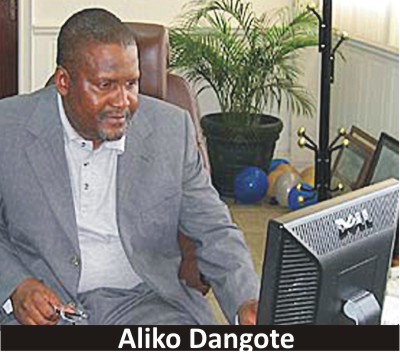 Alhaji Aliko Dangote (born April 10, 1957) is a businessman based in Nigeria. He is the owner of the Dangote Group, which has operations in Nigeria and several other countries in West Africa. A wealthy supporter of erstwhile President Olusegun Obasanjo and the ruling People’s Democratic Party (PDP), Dangote controls much of Nigeria’s commodities trade through his corporate and political connections. With an estimated current net worth of around US$ 2.5 billion, he was ranked by Forbes as one of the richest black African citizens [3] and the third richest person of African descent in the world behind Mohammed Al Amoudi ($9.0 billion) and Oprah Winfrey ($2.7 billion.) [4]
The Dangote Group, originally a small trading firm founded in 1977, is now a multi-trillion naira conglomerate with operations in Benin, Ghana, Nigeria, and Togo. Dangote’s businesses include food processing, cement manufacturing, and freight. The Dangote Group dominates the sugar market in Nigeria: it is the major sugar supplier to the country’s soft drink companies, breweries, and confectioners. Dangote Group has moved from being a trading company to Nigeria’s largest industrial group, including Dangote Sugar Refinery (the most capitalized company on the Nigeria Stock Exchange, valued at over US$3 billion with Aliko Dangote’s equity topping US$2 billion), Africa’s largest Cement Production Plant: Obajana Cement, Dangote Flour amongst others.
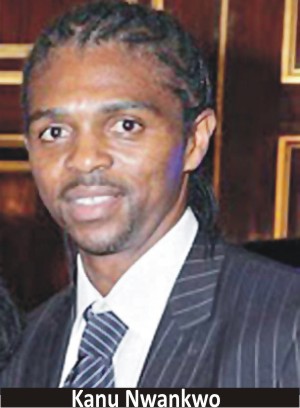 Nwankwo Kanu (born August 1, 1976 in Owerri, Kanu Nwankwo is a professional football |footballer, currently playing for West Bromwich Albion F. C. West Bromwich Albion in the English Premier League. He is known for his height, which is 198 cm (6’6″).
Kanu began his career, aged fifteen, at first division club Federation Works before moving to Iwuanyanwu National in 1992. After a notable performance at the Football U-17 World Championship|U-17 World Championships he was
signed by Ajax Amsterdam in 1993 for $250,000. He made his Ajax debut in 1994 and went on to play 54 times for the Netherlands|Dutch side, scoring 25 goals. In 1996, Ajax sold him to Internazionale Inter Milan for around $4.7
million; that summer he played in the Nigeria national football team|Nigerian squad that won gold at the 1996 Summer Olympics Olympics. Kanu was named African Footballer of the Year for that year.
At Inter a medical examination revealed a serious heart defect; he underwent surgery in November 1996 to replace an aortic valve and did not return to his club until April 1997. In February 1999, after just twelve games for Inter, Kanu was signed by Arsenal F. C. Arsenal for roughly $7.5 million. Initially his career was revived under Arsène Wenger, and he was named African Footballer of the Year for the second time in 1999.Kanu’s appearances for Arsenal gradually became less frequent, and in the 2004 offseason, after failing to get his contract with Arsenal extended, he moved to West Bromwich Albion F. C. West Brom on a free transfer. Kanu played for Nigeria in the Football World Cup 1998 and Football World Cup 2002 World Cups.
Kanu is remembered for his classic hat-trick against Chelsea F. C. Chelsea, in which one of the goals was scored parallel to the goal line
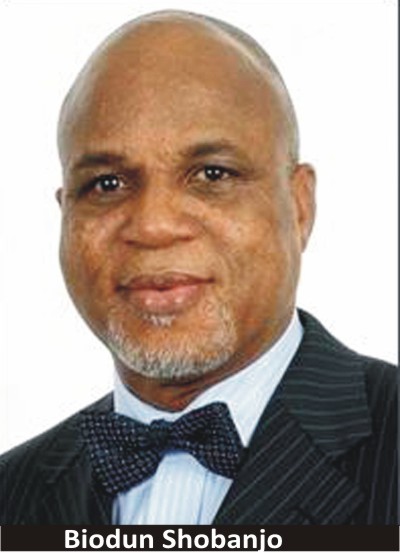 Biodun Shobanjo is the CEO of the new [reality tv series, The Apprentice Africa. Born some 63 years ago to a peripatetic civil servant, the Shobanjo family’s peregrinations imbued the young man with a cosmopolitan world view and his early experience as a broadcaster prepared him for life as an advertising practitioner.
Biodun Shobanjo, who rose to the post of Deputy Managing Director of Grant Advertising before his 30th birthday, co-founded Insight Communications (now Insight Grey) in 1979 and has today grown the company from the initial 18 man strong team into an advertising behemoth.
The Troyka Group which is the holding company for Insight, SKG2, Optimum Exposure, Media Perspective, MediaCom, Quadrant and Halogen amongst others employs over seven thousand Nigerian men and women.Biodun Shobanjo attributes his success to a fierce determination and a steely can-do attitude. “I was young when I left Grant advertising and young people are very daring, so it didn’t cross my mind that I wouldn’t make it. Again, without meaning to be immodest, I really have never failed in my life. If you’re not used to failing you don’t even contemplate failure.”
The ever dapper and sartorially elegant man of style says there are four essential elements for success and he lists them as “Professionalism. The other is honour. The third is integrity. The fourth is passion. They come in any order but if you have these four things, chances are that you’re going to succeed.” A consummate advertising and marketing communications practitioner, Biodun Shobanjo is a perfect choice for the CEO of The Apprentice Africa because as a believer in people, his business style has favoured a mentoring ambience which has spawned protégés who are leading lights of the advertising and marketing communications industry in Nigeria.
Today, the top 10 CEOs of the top 10 advertising and marketing communications outfits in Nigeria are proud alumni of what admirers love to refer to as the “Insight University.” Biodun Shobanjo brings to the Apprentice Africa almost forty years of top-notch corporate experience, entrepreneurial savvy, multi-disciplinary industry experience and a business maxim founded squarely on the belief that success is not negotiable. As he loves to say: “Winning is not everything. It is the only thing!”
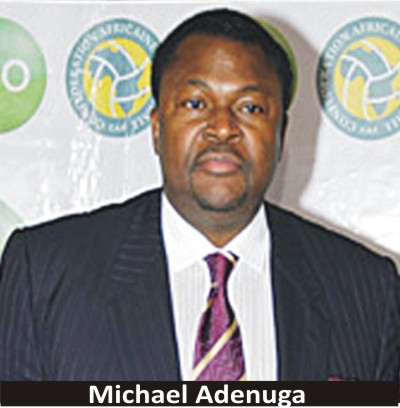 CHIEF MICHAEL ADENUGA - Chairman Chief Executive Officer of Globacom.
Adenuga’s rise to wealth and accompanying fame is an interesting story. His resolve to succeed against all odds started when, while in America, he worked as a taxi driver and security guard to sustain himself in school.
Born on April 29, 1953, Michael Adeniyi Isola Adenuga had his secondary school education at the Ibadan Grammar School, Ibadan, Oyo State, before proceeding to the North-Western University in Oklahoma and Pace University, New York, both in the United States where he studied business administration.
At age 26, Adenuga had already become a millionaire with connections in high places. With his unique flair for risks and sheer tenacity of purpose, in no time he started reaping profits in billions. He owns
Equitorial Trust Bank and Consolidated Oil, which carries out crude oil drilling, refining and marketing.
He won the bid in August 2002 through his Globacom Limited. The SNO has a wider range of operations as Globacom has the right to operate as a national carrier, operate digital mobile lines, serve as international gateway for telecommunications in the country and operate fixed wireless access phones.
Adenuga’s estate business and company shares traverse several countries in Western Europe, North America and the Middle-East.
have four children
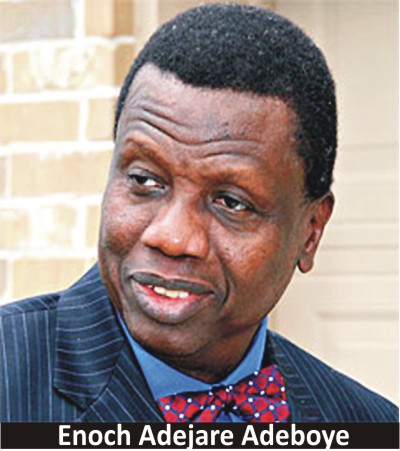 Enoch Adejare Adeboye is a Pastor from Nigeria and General Overseer of The Redeemed Christian Church of God (RCCG)
Before joining the pentecostal church Adeboye was a mathematics lecturer, and worked at the universities of Lagos and Ilorin; He has a PhD in applied mathematics from the University of Lagos, hitting a successful career in the academic world. After he joined The Redeemed Christian Church Of God he began working to translate the sermons of its then Pastor and founder, Rev. Josiah Olufemi Akindayomi, from Yoruba into English.
In 1981 by Divine Providence Adeboye became the General Overseer of The Redeemed Christian Church Of God, making him leader of the Church after the death of Papa Akindayomi the previous year. For three years he filled the role part-time, still lecturing at Ilorin, until giving up his university position to preach full-time.The Church, which was not well known before Adeboye took charge, now claims branches in over a hundred countries, including more than 14,000 in Nigeria. Adeboye has stated that his aim is to put a church within five minutes of every person on Earth.
In 2008 Newsweek magazine named Adeboye one of the fifty most powerful people in the world. He is married to Foluke Adeboye, also a pastor, with whom he has children